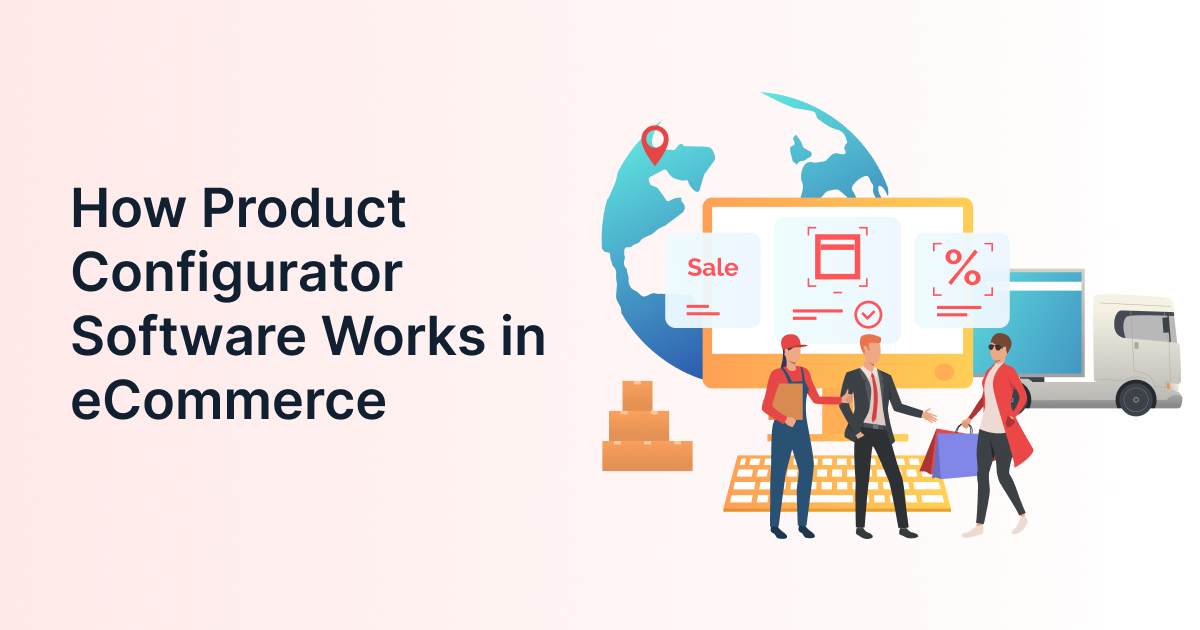
Shoppers hesitate to abandon carts when they cannot accurately visualize custom orders. Implementing robust product configurator software bridges this gap by turning static catalogs into interactive design experiences. By the end of this guide, you will understand the backend mechanics, frontend rendering, and direct commercial benefits of deploying a visual product configurator. You will also learn how to evaluate the right 3d product configurator ecommerce solutions to streamline your workflow from checkout directly to the production floor.
Your customers are abandoning carts not because your products are too expensive, but because they are uncertain. When an online shopper wants a custom shoe, a bespoke jacket, or a personalized promotional item, a drop-down menu of colors simply isn’t enough to build buyer confidence. They need to see exactly what they are paying for before they hit the checkout button. This is exactly where product configurator software steps in to save the sale.
At its core, a product configuration tool acts as a digital bridge between a customer’s imagination and your manufacturing floor. When a store integrates product configurator software, it allows buyers to alter colors, materials, and components in real time. This immediate visual feedback, specifically through a 3d product configurator ecommerce setup, removes purchase anxiety, drives up the average order value, and ensures that the exact specifications are automatically pushed to your backend for flawless production.

The Mechanics Behind the Screen: Frontend Visualization Meets Backend Logic
Understanding how a visual product configurator operates requires looking past the graphics. When a user clicks a color swatch on your Shopify or WooCommerce store, the product configurator software doesn’t just change a picture. It triggers a complex sequence of rules and logic. A high-quality product configuration tool ensures that only manufacturable combinations are displayed to the user.
If a specific fabric cannot be stitched with a certain zipper style, the product configurator software prevents the user from selecting it. This means every order generated through a visual product configurator is 100% viable for production. Your manufacturing team stops wasting time clarifying orders because the product configuration tool has already validated the constraints. By using reliable product configurator software, you eliminate manual quoting and data entry errors entirely.
Furthermore, a modern 3d product configurator must balance high-fidelity rendering with site speed. Slow load times kill conversions. Therefore, top-tier product configurators for ecommerce platforms utilize lightweight WebGL frameworks, ensuring the visual product configurator loads instantly on mobile devices without bogging down your server infrastructure.
Real-Time 3D and Visual Feedback: Turning Browsers into Buyers
There is a direct correlation between interactivity and checkout completion. A 3d product configurator provides a 360-degree interactive canvas that allows shoppers to zoom, spin, and inspect their customized item. This spatial awareness is why implementing a 3d product configurator ecommerce strategy is no longer a luxury, but a baseline expectation for modern retail.
When you deploy a 3d product configurator, the psychological ownership shifts. The customer is no longer just browsing; they are co-creating. This emotional investment facilitated by a 3d product configurator ecommerce experience actively reduces buyer’s remorse and slashes return rates. A reliable product configuration tool ensures that “what you see is what you get.”
Did You Know?
Brands that replace static product images with interactive 3D models experience an average conversion rate increase of up to 40%, while simultaneously seeing a significant drop in product return rates due to better expectation management.
(Source: Shopify Annual Commerce Report — 2023)
Seamless System Integration: Connecting Custom Orders to Production
A visual product configurator is useless if it creates bottlenecks in your backend operations. The best product configurator for ecommerce operates seamlessly with your existing tech stack. Whether you use Magento, WooCommerce, or Shopify, the product configurator software must push perfectly structured order specifications directly to your dashboard.
When an order is placed via a product configuration tool, the system should automatically generate print-ready files, cut patterns, or precise BOMs (Bills of Materials). This is why a product configurator for ecommerce is fundamentally an operational tool, not just a marketing widget. A visual product configurator takes the manual translation work out of the hands of your staff.
“The future of retail lies in the seamless integration of digital discovery and physical production. Brands that connect real-time visualization directly to their supply chains are the ones winning customer loyalty.”
— Anita Balchandani, Partner, McKinsey & Company
To truly optimize this flow, many brands look at upgrading their underlying technology. You can learn more about how intelligent systems are changing this landscape in our guide on how AI-powered product configurator software is redefining customization in e-commerce.
The Commercial Impact: Evaluating Product Configurator Software Examples
If you are evaluating product configurator software examples, the primary metric you must look at is ROI. Investing in product configurator software is not about making your website look modern; it is about protecting your profit margins. Let’s look at standard product configurator software examples to understand the shift in business metrics.
When reviewing product configurator software examples, businesses consistently report a reduction in pre-sales customer service tickets. Because the product configuration tool handles the quoting and visualization, customers do not need to email support to ask, “What does the red leather look like with the gold buckle?” The visual product configurator answers the question instantly.
For brands selling complex items, looking at 3d product configurator ecommerce case studies reveals massive jumps in Average Order Value (AOV). A 3d product configurator encourages upselling; it is much easier to sell a premium material upgrade when the customer can see it gleam in a 3d product configurator ecommerce environment.
Traditional Selling vs. Configurator-Enabled Selling
| Business Function | Traditional Static eCommerce | Product Configurator Software |
| User Experience | Passive scrolling, limited images. | Active co-creation, 360-degree viewing. |
| Order Accuracy | High risk of miscommunication/errors. | 100% accuracy via backend rules logic. |
| Production Speed | Requires manual review and file prep. | Auto-generates print/cut-ready files. |
| Return Rates | Higher due to mismatched expectations. | Significantly lower; exact visual preview. |
Choosing the Right Engine for Your eCommerce Architecture
Selecting the right product configurator software requires assessing your long-term operational needs. Not every product configuration tool can handle complex conditional logic or multi-layered pricing structures. If you are selling apparel, evaluating the specific nuances of the platform is critical, which we break down in our post on choosing the best apparel product configurator.
When deciding on a product configurator for ecommerce, verify its integration depth. Will the visual product configurator sync with your live inventory? Will the 3d product configurator ecommerce platform slow down your page speed? These are the questions that separate superficial product configurator software examples from robust, enterprise-ready systems.
A true product configurator for ecommerce operates as a single source of truth. The product configurator software aligns what the customer sees with what the factory produces. By implementing a high-performance visual product configurator, you protect your margins and scale your personalized offerings without scaling your headcount.

Conclusion
Transitioning to customizable commerce requires more than just adding a plugin to your store; it demands a shift in how you handle order logic. Product configurator software fundamentally solves the friction between customer expectation and manufacturing reality. By leveraging a product configuration tool, you replace purchase hesitation with visual certainty.
Ultimately, integrating a 3d product configurator ecommerce solution ensures that your business can scale personalization profitably. It reduces return rates, increases order values, and automates your production data. Stop losing customers to static images and start giving them the interactive control they expect. If your online store is struggling to manage custom orders efficiently, contact us and we will show how this integration actually works in a live environment is the fastest way to evaluate your options.