Fashion brands need to develop collections faster without letting sampling costs consume their margins. Virtual garment sampling offers a way to review designs digitally before committing to repeated physical prototypes. However, choosing the right software requires more than attractive 3D renders. Brands must consider design accuracy, customization capabilities, team workflows, integration requirements, and the intended use of each digital sample.
For apparel businesses evaluating digital product development, the distinction between garment simulation software and customer-facing product customization tools matters. Each serves a different purpose. This guide explains how the options compare, what features deserve scrutiny, and how to assess whether a platform fits your commercial goals.
Key Takeaways
- Virtual garment sampling can reduce dependence on repeated physical prototypes, but results depend on the workflow and garment complexity.
- Design simulation tools and online customization platforms serve different business needs.
- Evaluate rendering accuracy, file compatibility, collaboration, implementation costs, and measurable business outcomes before purchasing.
- A practical pilot using selected styles helps establish whether the software delivers sufficient value for your team.
What Is Virtual Sampling Software for Fashion Brands?
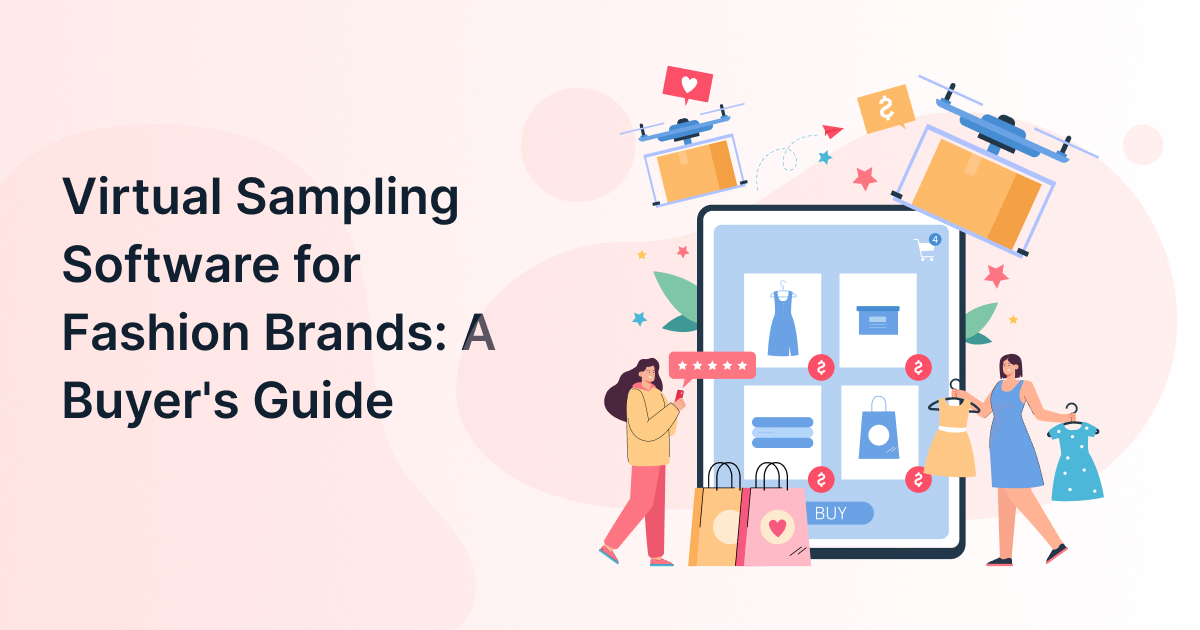
Virtual sampling software creates digital representations of garments so teams can review design choices before manufacturing physical samples. Depending on the platform, these representations can support visual approvals, fit assessment, material simulation, or customer-facing product personalization.
Traditional sampling involves producing garments, shipping them to stakeholders, collecting feedback, and repeating the process when revisions are necessary. Digital workflows allow some of these reviews to happen on screen.
How virtual sampling works
A typical workflow begins with garment patterns, measurements, materials, and design specifications. The software converts these inputs into a digital garment or visual product model.
Designers can then assess details such as:
- Color combinations, prints, and placement of graphics.
- Silhouette, proportions, and garment construction.
- Fabric appearance and simulated drape, where supported.
- Alternative design configurations before committing to production.
The scope matters. 3D virtual sampling tools can simulate garment construction and fit, while customization platforms may focus on displaying selectable colors, graphics, logos, and product options.
Brands exploring virtual sampling in fashion should first identify which approvals they need to digitize. A tool built for realistic garment development will not necessarily provide the customer-facing customization experience an apparel retailer requires.
What Business Problems Can Virtual Garment Sampling Solve?
The strongest business case for virtual garment sampling comes from reducing avoidable physical iterations and improving decisions before production.
Lower sampling expenditure
Multiple prototypes consume fabric, trims, labor, shipping budgets, and development time. Digital reviews can eliminate some rounds, although final physical testing may remain necessary.
Faster design decisions
Remote teams can review updated visuals without waiting for every prototype to arrive. This is particularly useful when brands coordinate with overseas manufacturers, merchandising teams, or wholesale buyers.
More design flexibility
Designers can test additional colorways and graphic variations before choosing which options deserve physical development.
Better buyer communication
Clear digital visuals help stakeholders discuss the same design version. Approval records and controlled revisions are still necessary to prevent outdated specifications from reaching production.
Which Type of Software Should Fashion Brands Choose?
The right platform depends on whether the primary task is developing a garment, presenting product options, or enabling customers to configure products online.
| Evaluation factor | 3D garment design software | Online product customization software | Hybrid workflow |
| Primary purpose | Design development and garment simulation | Customer-facing product personalization | Connects development and selling activities |
| Typical users | Designers, pattern makers, technical teams | Ecommerce teams, sales teams, customers | Design, sales, and product teams |
| Core capabilities | Pattern-based modeling, fit visualization, material simulation | Color, logo, text, graphic, and option selection | Depends on integration and available modules |
| Main benefit | Earlier design and fit decisions | Interactive buying and customization | Potentially broader digital coverage |
| Main limitation | Training and specialized design skills may be required | May not provide advanced pattern or fit simulation | Integration can add cost and complexity |
When to choose each option
Choose garment simulation software when your team needs to assess construction, patterns, grading, and fit before sending specifications to manufacturers. Specialized 3D fashion design software is particularly relevant to apparel developers managing complex garment engineering.
Choose customization software when customers or business buyers need to configure products online. For example, a uniform supplier might let corporate customers select garment colors, add logos, and preview branded shirts before ordering.
Consider a combined approach when both development accuracy and interactive selling matter. Confirm whether the tools exchange usable files or require duplicate product setup.

Which Features Matter Most When Comparing Solutions?
A useful shortlist starts with the tasks your team must complete, rather than the number of features advertised.
1. Visual accuracy and product realism
Ask whether the software represents your actual product requirements. Advanced garment simulation should support relevant fabric properties, fit analysis, pattern adjustments, and sizing workflows. A customization platform should accurately display colors, graphics, logos, and available product options.
Do not treat a polished render as proof of production accuracy. Screen-based previews cannot independently confirm stitching quality, fabric hand feel, shrinkage, or manufacturing tolerances.
2. Customization and configuration controls
Check whether administrators can define permitted options for each product. A uniform manufacturer, for instance, might restrict logo placement, embroidery colors, or available sizes according to customer requirements.
For customer-facing use cases, iDesigniBuy’s virtual sampling software supports product previews and customization features such as text, graphics, and multiple views. Evaluate these capabilities against your actual catalog and ordering workflow.
3. Integration and file compatibility
Your team should understand how the software fits into its existing environment. Check compatibility with ecommerce platforms, product data systems, design files, and any production handoff process you rely on.
Clarify whether product information transfers automatically or requires manual re-entry. Ask who maintains integrations and how revisions are synchronized.
4. Collaboration and approval controls
Look for version management, shareable previews, approval records, and clear ownership of revisions. These features become important when designers, merchants, manufacturers, and buyers work across different locations.
5. Usability and implementation effort
Even capable 3D apparel design software can deliver poor returns if staff need extensive training and cannot fit it into their daily work. Request a walkthrough using a representative product, not a generic demonstration.
Ask about onboarding, support, customization costs, licensing, and the skills needed to maintain product models.
What Are the Limitations of Digital Sampling?
Virtual garment sampling works best when brands understand which decisions can be made digitally and which still require physical validation.
Fit and material limitations
Simulation quality depends on the accuracy of patterns, measurements, fabric parameters, and model setup. A visual preview can help identify issues, but physical fittings remain important when evaluating comfort, movement, construction, and final production quality.
Adoption and training costs
Teams may need new skills, capable hardware, standardized product data, and time to establish repeatable workflows. These costs should be included in the business case rather than treating software licensing as the entire investment.
Supplier and production readiness
A digital sample is useful only when manufacturers can interpret the information they receive. Confirm that approved designs can be handed off through suitable technical files, measurements, specifications, and revision records.
Color and visual accuracy challenges
Digital renderings can approximate colors, textures, and finishes, but screen settings, lighting conditions, and software configurations may affect how products appear. Physical samples are still valuable for validating color consistency, trim details, embellishments, and overall visual appeal before production approval.
Data management and version control risks
Successful digital sampling relies on accurate and up-to-date product information across design, merchandising, and manufacturing teams. Inconsistent file management, outdated specifications, or poor version control can lead to miscommunication, approval delays, and production errors despite the use of digital workflows.
How Should You Calculate the ROI of Virtual Sampling Software?
Measure financial and operational changes against a baseline from your current sampling process.
Start by recording average sample-development cost per style, number of physical iterations, shipping expenses, and time between the first design submission and approval. Then compare these figures during a pilot.
A simple calculation could be:
Net annual benefit = Annual savings + Additional contribution from earlier launches − Total annual software and implementation costs
Include license fees, training, integration, internal labor, and ongoing model maintenance. Avoid counting faster approvals as financial savings unless they produce a measurable business result.
For example, a brand developing 100 styles annually could pilot the software on 15 representative styles. Track physical samples avoided, revision time, approval speed, and additional staff effort. Compare results with similar styles developed through the existing process.
This evidence will help determine whether apparel product development software offers enough value to justify broader adoption.
How Does iDesigniBuy Fit into the Evaluation?
iDesigniBuy is worth evaluating when your commercial objective includes interactive product customization on an existing ecommerce website. It helps businesses present configurable products and allows customers to personalize their selections.
That use case differs from specialized garment engineering platforms. If your team needs advanced pattern construction or fabric physics, confirm whether the proposed solution meets those requirements or whether a separate design tool is necessary.
Before shortlisting, prepare a demonstration brief containing a real garment, its available options, target users, required integrations, and expected business outcomes. Request platform demonstrations for the complete workflow, including how the final configuration is represented and handed off. A focused evaluation gives your team a more reliable basis for comparing software than feature lists alone.
Conclusion
Choosing virtual garment sampling technology is a business decision that should reflect how your company develops, presents, and sells apparel. The strongest option will solve a clearly defined problem without introducing more work than it removes. For B2B apparel businesses that want customers to personalize products online, iDesigniBuy offers a practical starting point for evaluating product customization software alongside existing ecommerce operations. Before committing, discuss your catalog, technical requirements, and expected outcomes with the team. Request a tailored demonstration that will help you judge the fit against your real virtual sampling use case.
Frequently Asked Questions
1. What is virtual garment sampling?
Virtual garment sampling uses digital garment representations to review designs before producing physical prototypes. Depending on the software, it can support visual approvals, fit assessment, material simulation, or customized product previews.
2. Is virtual sampling suitable for small fashion businesses?
Yes. Smaller brands can start with a limited group of styles and measure sample savings against software, training, and setup costs. A focused pilot helps establish whether the investment suits their production volume.
3. Does virtual sampling eliminate physical samples?
No. Virtual reviews can replace selected iterations, but physical samples remain important for checking fabric feel, construction, fit, durability, and production quality. The appropriate balance depends on the garment and approval requirements.
4. What is the difference between 3D design software and customization software?
3D design software focuses on garment construction, patterns, and simulated fit. Customization software lets users change permitted product attributes, such as colors, graphics, and logos, often through an online buying experience.
5. What is the cost of virtual sample software for fashion?
Pricing varies by licensing model, user count, implementation requirements, and available features. Request a quote that includes training, integration, support, and maintenance so you can compare the total cost of ownership.
6. How can I evaluate iDesigniBuy for my business?
Prepare a representative product and list your customization, ecommerce, and integration requirements. Request a demonstration, verify the supported workflow, and assess whether the solution meets your commercial needs before making a purchasing decision.