Summary
Jewelry design is no longer limited to sketches and manual prototypes. Today, digital tools allow designers and jewelry brands to create intricate designs, visualize them in realistic detail, and even offer personalized shopping experiences online. Modern jewelry design software combines advanced modeling, high-quality rendering, and interactive customization capabilities that help businesses design faster, reduce production errors, and deliver unique pieces customers truly value.
The Jewelry Industry Is Entering a Digital Design Era
Jewelry has always represented craftsmanship, creativity, and personal expression. Traditionally, designers relied on hand sketches, wax carving, and physical prototypes to create new pieces. While this approach showcased artistic skill, it often required significant time and effort to move from concept to production.
Design revisions were slow, and customers sometimes had to imagine how the final jewelry piece might look before it was actually produced.
Today, technology is transforming this process.
With the emergence of jewelry CAD software and 3D jewelry software, designers can now build intricate digital models with remarkable precision. These tools allow jewelry businesses to experiment with multiple design variations, visualize pieces from different angles, and refine details before production begins.
More importantly, modern jewelry design software enables brands to offer interactive customization experiences where customers can actively participate in designing their own jewelry. Instead of choosing from a fixed catalog, buyers can personalize rings, necklaces, or bracelets to match their personal style.
This digital transformation is reshaping how jewelry is designed, manufactured, and sold.

Why Jewelry Businesses Need Digital Design Tools
Customer expectations in the jewelry industry have evolved rapidly. Today’s buyers want to explore designs, personalize products, and visualize jewelry before making a purchase decision.
Traditional product catalogs no longer provide the immersive experience customers expect.
Advanced jewelry rendering software helps businesses create photorealistic visuals of jewelry pieces, while 3D jewelry software enables interactive design exploration. Together, these technologies help brands deliver engaging and transparent shopping experiences.
Digital design tools also provide several operational advantages:
- Faster product development
• Reduced design errors during production
• Improved communication between designers and manufacturers
• Better visualization for customers
• Increased confidence during online purchases
By adopting modern jewelry design platforms, brands can streamline workflows while creating memorable customer experiences.
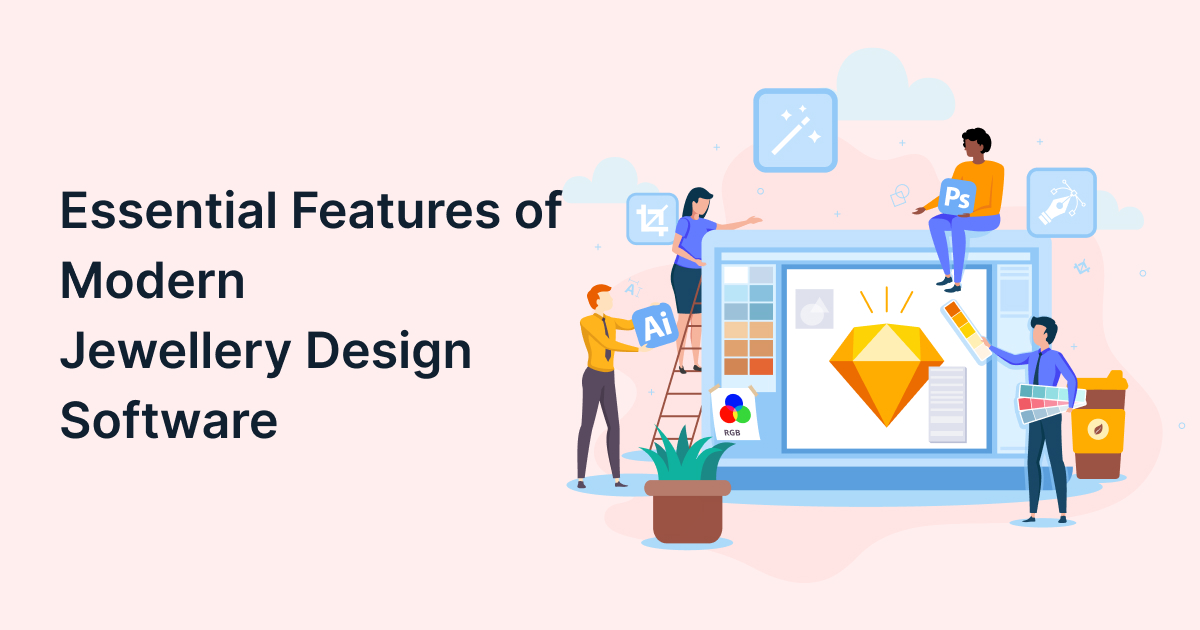
Essential Features of Modern Jewelry Design Software
To fully support jewelry designers and businesses, modern design platforms must go beyond simple modeling tools. The most effective solutions combine creative flexibility, realistic visualization, and seamless integration with online sales channels.
Below are the key features that define powerful jewelry design software.
1. Advanced 3D Jewelry Modeling
At the core of every professional jewelry CAD software is the ability to create precise 3D models.
Designers can digitally build complex jewelry structures including gemstone settings, intricate engravings, decorative patterns, and curved surfaces. These models provide a detailed preview of how the final jewelry piece will appear.
3D modeling tools allow designers to experiment with different variations while maintaining accurate dimensions, making the entire design process more efficient.
2. Photo realistic Jewelry Rendering
Once a design is created, visualization becomes essential.
Jewelry rendering software generates realistic images that replicate the appearance of metals, gemstones, lighting, and reflections. These photorealistic visuals allow customers to clearly see how the jewelry will look once it is produced.
Rendering technology also helps jewelry brands create high-quality images for marketing campaigns, product catalogs, and online stores.
3. Custom Jewelry Design Capabilities
Personalization is becoming one of the biggest drivers of jewelry purchases today.
Modern 3D jewelry software allows brands to provide custom jewelry design tools where customers can personalize products in real time.
Customers can typically customize:
- Metal type and color
• Gemstone shape and size
• Ring band thickness
• Engraved text or symbols
• Stone placements and settings
Interactive jewelry customization tools make the shopping experience more engaging while helping customers create jewelry that reflects their personality.
4. Real-Time Design Visualization
Real-time visualization is one of the most powerful capabilities of modern jewelry design platforms.
When customers change elements such as metal type or gemstone size, the design updates instantly. This interactive preview helps users experiment with multiple combinations and see how their jewelry will appear before placing an order.
A powerful 3D configurator allows customers to explore design variations easily while ensuring complete clarity about the final product.
5. Seamless eCommerce Integration
For jewelry brands selling online, design tools must integrate smoothly with their digital storefront.
Modern jewelry design software can be embedded directly into an eCommerce website, allowing customers to design and purchase jewelry without leaving the platform.
This integration supports:
- Smooth customization journeys
• Accurate design specifications for production
• Automated order processing
• Simplified workflows between design and manufacturing
For businesses, this creates a seamless connection between design, customer experience, and production.
6. Dynamic Pricing Based on Customization
Jewelry pricing depends on several factors such as metal type, gemstone size, and design complexity.
Advanced design platforms can automatically adjust product pricing based on selected customization options. As customers modify their jewelry design, the price updates instantly.
Dynamic pricing ensures transparency for customers while simplifying calculations for businesses.
7. Production-Ready CAD File Export
After a jewelry design is finalized, it must move smoothly into manufacturing.
Professional jewelry CAD software allows designers to export production-ready CAD files that are compatible with technologies such as 3D printing, CNC machining, and casting.
This capability reduces delays and ensures that the final manufactured piece accurately reflects the digital design.
8. Faster Design Iterations
Digital design tools make it easier to refine ideas and experiment with new concepts.
Designers can quickly adjust parameters, test variations, and present multiple design options without recreating the entire model. This flexibility allows jewelry brands to innovate faster and respond to changing trends.
9. Design Libraries and Templates
Many modern 3D jewelry software platforms include design libraries containing pre-built elements such as ring settings, band styles, and stone arrangements.
Designers can use these templates as a starting point and modify them to create unique pieces. This approach accelerates design workflows while maintaining creative flexibility.
10. Enhanced Customer Engagement
Perhaps the greatest benefit of modern jewelry design technology is the experience it creates for customers.
Interactive design tools transform the shopping process from simple browsing into active participation. Customers can experiment with styles, personalize details, and visualize their jewelry before purchasing.
This immersive experience increases confidence, reduces product returns, and strengthens customer loyalty.

Enable Interactive Jewelry Design Experiences
Modern jewelry businesses need tools that combine creativity with digital convenience. With advanced jewelry design software, brands can create detailed designs, offer customization, and allow customers to visualize their jewelry before purchase.
With iDesigniBuy’s jewelry design tool, businesses can deliver interactive customization experiences that make it easier for customers to design, personalize, and purchase jewelry online.
Explore iDesigniBuy’s Jewelry Design Software to start offering personalized jewelry design experiences.
FAQs
1. What is jewelry design software used for?
Jewelry design software helps designers and jewelry businesses create digital jewelry models, visualize designs in 3D, and prepare them for manufacturing. It simplifies the design process while allowing businesses to offer custom jewelry design experiences to customers.
2. What is the difference between jewelry CAD software and jewelry rendering software?
Jewelry CAD software is used to create precise 3D models of jewelry pieces, including gemstone settings and design structures. Jewelry rendering software, on the other hand, generates photorealistic images of those designs by simulating lighting, reflections, and gemstone brilliance.
3. How does 3D jewelry software improve the design process?
3D jewelry software allows designers to create detailed models, test different design variations, and visualize jewelry from multiple angles before production. This reduces design errors, speeds up development, and improves communication between designers and manufacturers.
4. Can customers design their own jewelry using jewelry design software?
Yes. Many modern platforms allow customers to personalize rings, necklaces, and bracelets using interactive customization tools. These tools let users adjust elements such as metal type, gemstones, engravings, and settings while viewing the design in real time.
5. What features should businesses look for in modernjewelrydesign software?
Businesses should look for features such as advanced 3D modeling, realistic jewelry rendering, customization capabilities, real-time design visualization, eCommerce integration, dynamic pricing, and production-ready CAD file export.