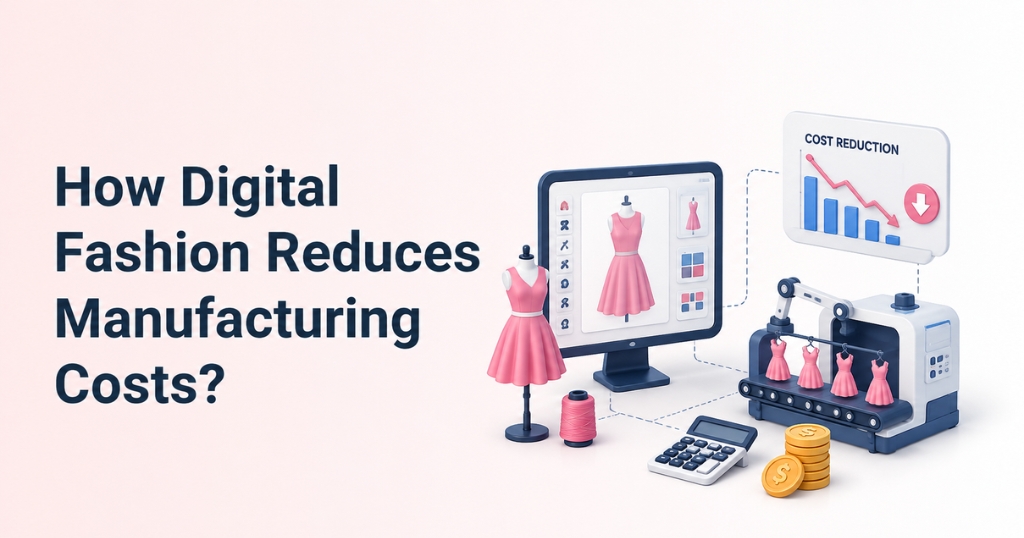
The apparel manufacturing landscape faces unprecedented margin pressures today. Traditional product development methodologies are grappling with significant, compounding expenses long before a garment hits the production floor.
From resource-intensive physical sampling loops to undesirable fabric cutting errors, the financial waste embedded in conventional lifecycles can cripple business agility.
To survive, forward-thinking apparel enterprises are pivoting toward digital fashion. By transitioning physical design workflows into hyper-realistic virtual spaces, brands can significantly optimize production workflows, reduce physical waste, and slash turnaround times.
This comprehensive analysis explores how digital fashion reduces manufacturing costs, streamlines cross-team collaboration, and delivers measurable ROI for modern apparel businesses.
Summary
Here are the ways in which digital fashion helps reduce manufacturing costs:
- Transitioning to virtual prototypes completely bypasses multiple physical sampling loops, eliminating material and courier overheads.
- Automated digital pattern placement minimizes physical raw material waste and reduces errors before cutting begins.
- Real-time, cloud-based design adjustments compress traditional product development cycles from months to days.
- Centralized digital assets ensure flawless communication between designers, factories, and merchandising teams.

Why Are Apparel Manufacturing Costs Rising?
Legacy apparel manufacturing costs are escalating due to structural inefficiencies, multi-stage physical prototyping, severe raw material wastage, and systemic communication gaps between design rooms and factory floors.
Traditional apparel production models are inherently prone to financial leakage. Escalating global labor rates, combined with material wastage during manual pattern adjustments, create severe margin challenges.
When brands rely on sequential physical sampling, each iterative update requires cutting new fabric, assembling prototypes, and shipping them across international borders. These multiple physical sampling rounds accumulate massive costs and introduce significant production delays.
Additionally, global sourcing complexities and fragmentation compound these issues. A single communication gap between a design house and an offshore factory can result in a misaligned production batch, forcing last-minute design changes that destroy profit margins.
When you factor in skyrocketing international shipping and logistics costs, the financial risk of inaccurate development becomes unsustainable for growing enterprises.
How Does Digital Fashion Reduce Manufacturing Costs?
Eliminates Multiple Physical Samples
Virtual prototypes serve as functional, true-to-life alternatives to traditional physical samples. Instead of waiting weeks for an overseas facility to build and mail a physical prototype, design teams evaluate style options instantly on screen. This immediate validation yields faster approvals and slashes material costs.
Reduces Fabric Waste
By leveraging digital pattern layouts and advanced nesting tools, production planners see exactly how a layout impacts material consumption before laying down fabric. Accurate fit simulations identify tight spots or unnecessary design bulk early on. This prevents cutting errors on the production line, ensuring optimal fabric utilization. Transitioning to virtual fashion design aligns business sustainability targets with measurable cost reductions.
Detects Design Problems Before Production
Fixing a design flaw in apparel design solution costs nothing; discovering that same error after cutting a thousand physical pieces is catastrophic. Through virtual asset testing, pattern makers inspect seam placement, trim positioning, and mechanical stress points under dynamic movement. If a pocket placement or zipper angle compromises manufacturing feasibility, engineers correct the digital file immediately, preventing defects from reaching the factory floor.
Speeds Up Product Development
Leveraging a modern digital fashion technology stack allows brands to run development processes concurrently rather than sequentially. Design, merchandising, and factory teams review adjustments simultaneously via cloud interfaces. This parallel workflow significantly reduces overall development timelines, shrinking product approval cycles from several weeks to mere hours.
Improves Communication Between Teams
Miscommunication between creative teams and production facilities remains a leading cause of expensive factory reworks. Centralizing development around a single digital asset provides an immutable “source of truth.” Designers, internal merchandisers, factories, and retail buyers interact with the exact same 3D prototype. This structural transparency removes subjective interpretation, ensuring the final manufactured garment matches the approved design parameters.
Optimizes Material Consumption
Integrating digital tools allows manufacturers to compute precise material calculations instantly. Automated pattern arrangement tools maximize marker efficiency, squeezing the highest possible number of pattern pieces out of every fabric roll. Production facilities receive a precise, software-generated bill of materials (BOM) before ordering raw materials, eliminating the financial burden of over-purchasing and storing deadstock fabric.
Reduces Returns Caused by Design Errors
A significant portion of post-purchase consumer returns stems from systematic fit issues developed during flawed physical sampling processes. Digital simulations use accurate human body scan data to validate fits across diverse size ranges. This rigorous digital testing ensures exceptional production consistency. By resolving design-induced fit anomalies prior to manufacturing, organizations enhance final consumer satisfaction and lower return handling costs.
Supports Faster Manufacturing Decisions
When the market changes, purchasing managers cannot afford to wait on manual vendor quotes. Digital assets allow brands to share accurate technical packages with global suppliers instantly. Factory managers assess production feasibility using the shared 3D file, expediting component sourcing and assembly planning. These streamlined workflows empower brands to make quick, data-driven manufacturing commitments that protect operational margins.
Traditional Apparel Development Vs Digital Fashion
Traditional garment development relies on manual, resource-heavy processes that accumulate material overhead. Shifting to digital systems replaces physical assets with highly accurate data, creating a faster and more economical production cycle.
The table below contrasts the operational steps and financial inputs required by both development models:
| Development Metric | Traditional Apparel Development | Digital Fashion |
| Prototyping Method | Multiple physical samples created iteratively | High-fidelity virtual prototypes |
| Approval Cycle Time | Weeks or months per iteration | Real-time or same-day validation |
| Logistics Overhead | High international courier fees for samples | Zero shipping costs for digital files |
| Design Revisions | Manual pattern cutting and rebuilding | Dynamic, real-time software updates |
| Material Efficiency | Higher waste from physical trial-and-error | Optimized fabric usage via digital nesting |
| Development Cost | High capital expenditure per style | Minimal incremental cost per design variant |
| Production Readiness | Delayed by physical errors and re-sampling | Rapid, verified tech-pack handoff |
Beyond Cost Savings: Additional Business Benefits of Digital Fashion
Embracing a digital fashion architecture saves material expenses while building agility, improving market responsiveness, and strengthening supplier relationships across the global supply chain.
Implementing modern software applications unlocks significant commercial advantages beyond direct cost reductions:
- Faster Product Launches: Compressing development timelines allows brands to respond to emerging market shifts in real time, driving higher full-price sell-through rates.
- Better Sustainability Performance: Minimizing physical sampling and fabric scrap aligns organizations with global environmental regulations and eco-conscious consumer expectations.
- Improved Product Quality: Digital tools like apparel design software eliminate structural guesswork, resulting in consistent fit and manufacturing precision across all production runs.
- Greater Supply Chain Visibility: Unified digital assets provide clear production insights to all vendors, factories, and stakeholders, mitigating operational risks.
- Impactful Commercial Presentations: Wholesale brands can showcase detailed 3D design galleries to global buyers before manufacturing a single commercial garment.
If you are curious to learn more about how virtual sampling in digital fashion reduces cost and fabric wastage, read this comprehensive article.
How to Successfully Adopt Digital Fashion in Your Business?
Transitioning to digital processes requires detailed workflow evaluation, strategic software onboarding, rigorous employee upskilling, and a structured pilot program.
Before purchasing new software, map out your existing pre-production lifecycle. Quantify the exact hours spent on manual pattern development, the total number of physical prototypes required per collection, and your current material costs.
Establishing this baseline allows you to set clear metrics for success.
- Identify High-Cost Bottlenecks: Pinpoint where your current pipeline experiences the longest delays or highest expenses. If shipping physical prototypes to overseas clients accounts for a large portion of your budget, focus on implementing virtual approval tools first to maximize your immediate savings.
- Choose the Right Digital Fashion Software: Select an enterprise-grade platform that aligns with your operational scale. When researching software vendors, prioritize solutions that offer intuitive user interfaces, precise 3D rendering engines, flexible pattern drafting capabilities, and smooth integrations with your active ERP or PLM databases.
- Train Internal Teams: A software platform is only as effective as the professionals operating it. Invest in thorough upskilling paths for your pattern designers, creative teams, and production planners. Bridging the gap between traditional pattern making and digital environments is essential for long-term operational success.
- Start With One Product Category: Avoid revamping your entire product catalog overnight. Instead, roll out a targeted pilot program on a single predictable line, such as basic activewear or core shirting. Once you refine the virtual approval workflow, scale the digital methodology across more complex product lines.
Is Digital Fashion Worth the Investment?
While implementing digital workflows requires upfront capital, the long-term returns, driven by lower sampling costs and minimized material waste, make it highly profitable for expanding apparel brands.
For growing apparel manufacturers, evaluating the ROI of digital fashion technology requires looking past initial onboarding costs. While acquisition fees, hardware upgrades, and team training require upfront capital, the recurring savings consistently justify the investment.
By replacing physical prototypes with virtual alternatives, companies drastically reduce material spend, international courier fees, and factory reworks. Additionally, faster development cycles allow businesses to seize seasonal trends quickly, boosting revenue.
For modern apparel enterprises aiming to scale efficiently, transitioning to digital workflows is a strategic move that delivers sustainable profitability.

Conclusion
Navigating volatile consumer markets and rising material overhead requires a strategic shift from resource-heavy, traditional development to data-driven, automated workflows.
Transitioning to virtual design systems allows apparel brands to remove expensive physical bottlenecks, optimize fabric utilization, and build clear communication across global supply chains. Implementing digital fashion solutions protects profit margins and positions businesses for long-term growth.
As your enterprise explores solutions for cost optimization and greater operational agility, partnering with dedicated technology experts is a logical next step. Embracing these advanced processes helps your business stay agile, precise, and highly competitive.
To see how specialized design tools can integrate into your current production workflow, connect with the iDesigniBuy specialists to arrange a tailored product demonstration.
Frequently Asked Questions
1. How does digital fashion reduce manufacturing costs?
Digital workflows lower production expenses by replacing physical garment samples with accurate 3D virtual prototypes. This digital transition removes the material waste, manual labor, and international shipping fees tied to traditional prototyping. It also allows brands to run fit checks early, optimizing fabric usage and preventing expensive manufacturing reworks.
2. Does digital fashion eliminate physical samples completely?
While digital workflows can cut pre-production physical samples significantly, many brands still create a single final physical prototype for sensory and quality checks before full production. However, using virtual try-on software ensures this final sample is highly accurate, preventing the need for multiple exploratory prototyping rounds.
3. What industries benefit most from digital fashion?
The fast fashion, sportswear, luxury fashion, and corporate uniform industries see the highest returns from this technology. Any apparel segment managing shifting collections, complex sizing, or international supply networks can use digital design tools to speed up approvals and lower overall development costs.
4. Is digital fashion only useful for large apparel brands?
Not at all. While large enterprises use virtual workflows to manage complex global supply chains, small and mid-sized fashion businesses leverage the technology to compete effectively. Virtual prototyping allows smaller brands to develop and launch new collections without funding extensive, capital-intensive physical sampling phases.
5. What features should businesses look for in digital fashion software?
Organizations should prioritize platforms that provide realistic fabric drape simulation, accurate pattern creation, and smooth file sharing. The software should integrate seamlessly with your current PLM and ERP systems, and scale easily to match your growing production needs.
6. How does virtual try-on technology integrate with existing e-commerce systems?
Modern virtual sampling software connects with popular e-commerce platforms through secure web APIs and plugins. These modules link your online store’s inventory with cloud-hosted 3D design databases, allowing customers to view accurate garment fits in real time without slowing down your website’s performance.
7. What is the expected ROI timeline after deploying virtual garment solutions?
Most mid-sized apparel brands see a positive return on investment within six to twelve months of deployment. This fast return is driven by the immediate elimination of physical sample shipping costs, reduced material waste, and faster product approvals, which quickly balance out the initial software onboarding and training expenses.